

Seminar
Nasso Family Science Centre, Room 3046
Calibration & Application of an NaI(Tl) Detector for Environmental Radiation Measurement
KJ Lawrence
Environmental gamma radiation originates from naturally occurring and anthropogenic
radionuclides. These radioactive substances are hidden within the soil which surrounds
us every day, contributing to long-term radiation exposure. Gamma-ray spectroscopy has
been widely used to monitor environmental radioactivity in many regions across the globe.
Many studies focus primarily on regions with industrial or nuclear activity, leaving gaps
in the understanding of radiation levels in rural areas and farmlands. This research aims
to address this lack of regional data by measuring gamma emitting radionuclides in soil
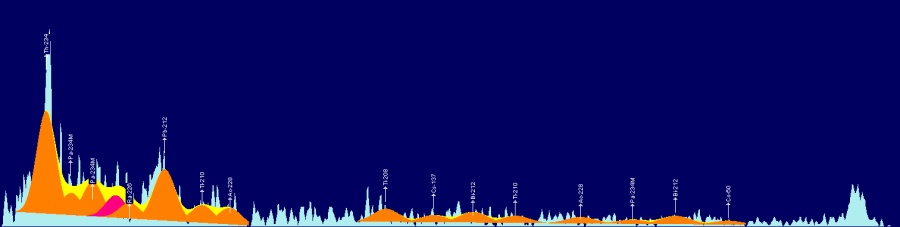
samples using a sodium iodide (NaI (Tl)) scintillation detector. The gamma spectrum
was acquired from collected soil samples and analysis was done using GammaVision
Software. Results show that Uranium-238 series dominates in both provinces, reflecting
regional geology. Detected activities are used to calculate annual effective doses from
terrestrial radiation. The dose rates of 0.269 and 0.129 mSv/yr for Nova Scotia and New
Brunswick are in agreement with expected natural background levels. With no elevated
background radiation and no evidence of nuclear contamination, the regions of interest
pose no health concern.